TL;DR
- Jacksonville’s year-round outdoor living climate makes outdoor kitchens one of the highest-use backyard investments in Northeast Florida
- Key planning decisions include site placement, shelter, utilities, materials, and appliances
- Materials must be chosen specifically for Florida’s heat, humidity, and UV exposure
- A shelter or enclosure over your outdoor kitchen dramatically extends its comfort and usability
- Lifetime Enclosures has been designing and building custom outdoor kitchens for Northeast Florida homeowners since 1990
Florida is one of the country’s strongest markets for outdoor kitchens — and if you live here, that’s no surprise. When the weather cooperates nearly 365 days a year, a backyard kitchen isn’t a luxury — it becomes a natural extension of the way you actually live.
But if you’ve started researching outdoor kitchens in Jacksonville and feel overwhelmed by the options, you’re not alone. The planning process involves more decisions than most homeowners expect — and the stakes are higher in Florida’s climate than they would be in other parts of the country.
This guide covers everything you need to think through before building, from site placement and utility planning to material selection and the shelter question that most contractors skip over entirely.
Why Jacksonville Is One of the Best (and Most Demanding) Places to Build an Outdoor Kitchen
Most regions in the U.S. get four or five months of comfortable outdoor cooking weather. Jacksonville homeowners get twelve.
That’s a significant advantage — and it’s also why outdoor kitchen design in Northeast Florida needs to account for conditions other regions barely deal with:
- Heat and UV exposure. Summer afternoons routinely push into the 90s, and direct sun can degrade materials, fade finishes, and make an unshaded kitchen genuinely uncomfortable by noon.
- Humidity. Jacksonville’s relative humidity regularly exceeds 70% during summer months. Wood, certain metals, and low-quality composites take a beating.
- Afternoon thunderstorms. Florida’s summer pattern means nearly daily rain between June and September. An uncovered outdoor kitchen is a kitchen you won’t use for half the year.
- Coastal moisture. Many Northeast Florida neighborhoods sit close to the water, where humidity and coastal air are especially hard on materials that aren’t specified for Florida conditions.
Building an outdoor kitchen in Jacksonville without factoring in these conditions is the single most common planning mistake — and the one that leads to expensive repairs or replacements within a few years.
The U.S. Department of Energy’s guidance on moisture management in homes emphasizes that humid-climate environments require materials and construction methods that specifically account for elevated moisture exposure. Outdoor kitchens are no exception.
Step 1: Choose the Right Site
Before anything else, decide where the kitchen will live.
Proximity to the house. Most Jacksonville homeowners position their outdoor kitchen adjacent to the back of the home, often extending off an existing patio or lanai. This placement minimizes the cost of running gas, water, and electrical connections from the house. The farther from the structure, the more you’ll spend on utility runs.
Sun and shade. Note how sunlight moves across your backyard throughout the day. South- and west-facing positions get the most afternoon sun. If you plan to cook in the evenings, a west-facing kitchen without a shade structure will be uncomfortable from about 2 p.m. onward through the summer.
Clearance and airflow. Grilling produces smoke and heat. Position the kitchen with enough clearance from the main structure, nearby trees, and neighbor sightlines — the National Fire Protection Association’s grilling-safety guidance recommends keeping grills well clear of structures and overhanging branches. Local building codes also typically require minimum setbacks from property lines and structures; your contractor will confirm these during permitting.
View and flow. Most people building an outdoor kitchen want to face the backyard or pool, not a fence. Think about where the cook will stand and what they’ll be looking at while they work.
Step 2: Decide on a Shelter First — Not Last
This is the step most people get backwards.
Homeowners typically plan the kitchen appliances and layout first, then add a cover or enclosure as an afterthought. But the shelter decision fundamentally shapes everything else — dimensions, utility placement, lighting, and how the space actually functions.
Why a shelter matters in Jacksonville:
An uncovered outdoor kitchen in Florida means your space is unusable during afternoon storms, too hot to stand near during peak summer sun, and exposed to UV that fades surfaces and degrades finishes year after year. A covered outdoor kitchen in Florida means you use it almost every day of the year — through rain, shine, and the humidity that defines our climate.
Your shelter options include:
- Patio cover or pergola. A solid or louvered roof structure provides shade and rain protection while keeping the space open-air. This is the most common pairing for outdoor kitchens in Jacksonville, and it’s the setup that allows for the best smoke ventilation.
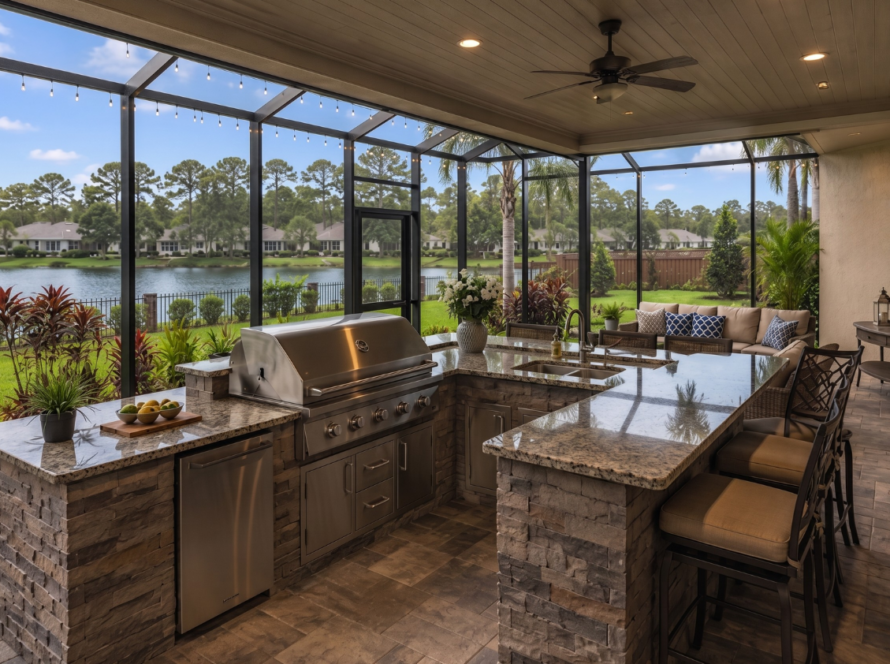
- Screen enclosure. A screened structure around the kitchen keeps bugs out and provides some shade and wind protection. Not ideal as the only covering over cooking appliances (smoke and grease need to vent), but works well around a defined grill zone with proper clearance.
- Combination. Many Lifetime Enclosures customers integrate an outdoor kitchen into a larger outdoor living space — a covered patio area for cooking, adjacent to a screened lanai or glass/vinyl enclosure for dining and relaxing.
You can see how custom patio covers in Jacksonville are designed specifically to pair with outdoor kitchens and living spaces in Florida’s climate.
Step 3: Plan Your Utilities Early
This is the planning step that surprises most homeowners with its complexity.
Gas. If you’re building a gas grill or side burner, you’ll need a natural gas line run to the site or a dedicated propane setup. In Jacksonville, natural gas connections require a licensed plumber and city inspection. Budget time for this — it’s often on the critical path for project completion.
Electrical. Outdoor outlets, lighting, a refrigerator, and any powered appliances require dedicated GFCI-protected electrical circuits rated for outdoor use. This isn’t the place for a long extension cord.
Water. A sink adds significant functionality to any outdoor kitchen and requires both supply lines and drainage. Drainage can be routed into an existing system or handled with a dry well, depending on your site.
Ventilation. If your kitchen is under a covered structure, a properly sized hood or ventilation fan above the cooking area is recommended — and may be required by local code. Lifetime Enclosures coordinates with licensed contractors to handle all utility work during the build, so you’re not managing multiple vendors.
Step 4: Choose Materials That Survive Florida
This is where a lot of outdoor kitchens built by the wrong contractor fall apart — sometimes literally.
Florida’s combination of heat, humidity, and UV is genuinely hostile to materials that aren’t specified for it. Here’s what holds up:
Countertops:
- Porcelain or granite. Heat-resistant, UV-stable, and nearly impervious to moisture. The best choices for outdoor kitchens in Florida.
- Concrete. Durable and highly customizable, but requires sealing to prevent staining and moisture absorption.
- Avoid standard interior stone or tile not rated for outdoor exposure in Florida conditions.
Cabinets and storage:
- Powder-coated aluminum or stainless steel. Both stand up to humidity and UV, and stainless is the industry standard for outdoor kitchen cabinetry.
- HDPE (High-Density Polyethylene) panels. Won’t rot, crack, or warp in humidity. Increasingly popular as a wood-look alternative to stainless.
- Avoid untreated or improperly sealed wood. Florida’s humidity will accelerate rot and deterioration.
Frames and structure:
- Heavy-gauge aluminum is the dominant structural choice in Florida — custom outdoor kitchens built by Lifetime Enclosures use aluminum framing built to stand up to Jacksonville’s heat and humidity over time.
Step 5: Select Your Appliances
The core decisions are:
The grill. This is the centerpiece of most outdoor kitchens. Options include natural gas, propane, charcoal, and combination units. For Jacksonville homeowners who plan to cook frequently, a built-in gas grill (natural gas if your line is run, propane if not) offers the most convenience. Size up: a 30-inch grill feels undersized once you start cooking for a group.
Side burner or searing station. Useful for sauces, sides, and high-heat cooking that doesn’t work well on a grill. Not essential, but frequently requested by serious outdoor cooks.
Refrigerator. An outdoor-rated refrigerator is one of the highest-use additions to any outdoor kitchen. It eliminates trips back inside and is rated for the temperature swings and humidity Florida kitchens experience.
Sink. Adds significant convenience for prep and cleanup. If you’re running water anyway, a sink is worth including.
Additional options: Pizza ovens, smokers, ice makers, outdoor-rated dishwashers, and integrated sound systems are all increasingly common in Florida outdoor kitchens. Add what fits your lifestyle and budget — but prioritize the core cooking station first.
Step 6: Understand the Permit Process in Jacksonville
Yes, outdoor kitchens in Jacksonville require permits — typically for gas lines, electrical work, structural components, and anything involving a covered roof.
This is a feature, not a burden. Permitted work protects you during resale, ensures the build meets code, and gives you recourse if something goes wrong.
Local building-permit requirements in Northeast Florida apply to outdoor structures, utility connections, and roofed additions. A licensed contractor like Lifetime Enclosures manages the permit process as part of the project — you don’t need to navigate this alone.
The Return on Investment: Is an Outdoor Kitchen Worth It in Jacksonville?
For Florida homeowners, an outdoor kitchen is one of the higher-return outdoor improvements you can make — but the payoff depends heavily on how well it’s built.
Beyond resale value, the day-to-day return is real too. Cooking outside during Jacksonville summers keeps indoor heat down and reduces the load on your air conditioning system. And in a market where outdoor living is an expectation, a well-built outdoor cooking space is a feature buyers actively look for.
The flip side: a poorly specified outdoor kitchen that needs repairs in year two or replacement in year five isn’t returning anything. That’s why material selection and proper installation matter far more than the length of the appliance list.
What to Ask Before Hiring an Outdoor Kitchen Contractor
Not every contractor who builds outdoor kitchens in Jacksonville is experienced with Florida-specific requirements. Before signing, ask:
- Are you licensed and insured in Florida? Required for permitted work.
- Who handles the permit process? You want a contractor who manages this entirely.
- What materials do you spec for outdoor kitchens in Florida’s climate? A good answer will mention aluminum framing, outdoor-rated cabinets and countertops, and Florida-appropriate appliances.
- Do you handle utility coordination? Gas, electric, and water connections require licensed subcontractors. The best builders manage this coordination on your behalf.
- Can I see completed outdoor kitchen projects in Northeast Florida? Local references and a local portfolio matter here.
Frequently Asked Questions
How much does an outdoor kitchen cost in Jacksonville, FL? Outdoor kitchen costs vary widely depending on size, materials, appliances, utility runs, and whether you add a covered structure or enclosure. Because every project is different, the most accurate way to budget is a free on-site consultation with Lifetime Enclosures, scoped to your specific space and goals.
Do outdoor kitchens in Florida need to be covered? They don’t technically require a cover, but for practical purposes in Jacksonville, an uncovered outdoor kitchen limits your use significantly. Florida’s afternoon thunderstorm season (June through September) and intense UV exposure make a shelter — whether a patio cover, pergola, or screen enclosure — a worthwhile addition that dramatically expands how often you actually use the space.
What permits are required for an outdoor kitchen in Jacksonville? Most outdoor kitchen projects require permits for gas line connections, electrical circuits, and any structural or roofed components. Your local building department oversees permitting in Northeast Florida, and Lifetime Enclosures manages the entire permit process as part of every build.
What’s the best material for outdoor kitchen countertops in Florida? Porcelain and granite are the top choices for Florida outdoor kitchens — both are heat-resistant, UV-stable, and highly durable in humid conditions. Concrete is a good option when properly sealed. Avoid interior-grade stone or unsealed materials that will absorb moisture and stain in Jacksonville’s climate.
How long does it take to build an outdoor kitchen in Jacksonville? Timeline varies based on project scope, utility complexity, and material lead times. A straightforward grill island with existing utility connections can be completed in a few weeks. A full outdoor kitchen with new utility runs, a covered structure, and custom cabinetry typically takes 6 to 12 weeks from design approval to completion. Permit processing time adds additional lead time.
Can an outdoor kitchen be added to an existing screened enclosure or enclosed lanai? Yes — and it’s one of the most popular configurations for Jacksonville homeowners. Adding a cooking zone to an existing enclosed outdoor space works well, provided there’s adequate ventilation for the cooking appliances. Lifetime Enclosures can evaluate your existing space and design a kitchen that integrates cleanly with your current structure.
Ready to Build Your Vision?
Lifetime Enclosures has been designing and building custom outdoor living spaces for Northeast Florida homeowners since 1990. Every outdoor kitchen project starts with a free on-site consultation — no pressure, just an honest look at what’s possible for your backyard and your budget.
Request your free consultation at lifetimeenclosures.com and start planning the outdoor kitchen your Jacksonville backyard deserves.