TL;DR
- A pergola is an open-beam structure that provides partial shade while keeping the space feeling airy and connected to the sky
- It’s a different product than a solid patio cover or a fully screened enclosure, and each fits a different backyard goal
- Shade structures like pergolas play a real role in sun protection, not just style, especially during Northeast Florida’s long sunny season
- Aluminum is the standard material for Florida pergolas, and exterior structures typically need documented Florida product approval
- Pergolas pair especially well with outdoor kitchens and entertaining areas that need some shade without fully enclosing the space
Not every backyard project needs a roof. Sometimes what a space actually needs is a little structure, a little shade, and a lot of open sky, which is exactly what a pergola is built to do. Lifetime Enclosures has seen steady interest in pergolas this year as homeowners look for something between a bare patio and a fully covered structure, and it’s worth understanding what a pergola actually is before deciding if it fits your backyard.
What a Pergola Actually Is
A pergola is an open-beam outdoor structure, typically a set of upright posts supporting horizontal crossbeams, that creates partial shade without a solid roof. Sunlight filters through the beams throughout the day, which gives a pergola a different feel than a fully covered patio: airier, more open, and still connected to the sky above.
Some pergolas are built with fixed beams for a consistent amount of dappled shade. Others use adjustable louvers that can be angled open or closed, giving homeowners more control over how much sun reaches the space underneath at different times of day.
Pergola vs. Patio Cover vs. Screen Enclosure
These three products solve overlapping but different problems, and picking the right one depends mostly on what you want the space to feel like.
A patio cover has a solid roof, which blocks sun and rain completely and creates a more traditional covered-porch feel. A screen enclosure adds screening around an open or covered structure, keeping insects and debris out while staying open to airflow. A pergola sits apart from both: it’s the most open of the three, offering partial shade and structure without fully closing off the space to sun, rain, or view.
Homeowners who want maximum weather protection generally lean toward a patio cover or enclosure. Homeowners who want to keep a space feeling open and connected to the yard, while still getting some relief from direct sun, tend to land on a pergola.
Why Shade Structures Matter Beyond Style
A pergola isn’t purely decorative. Northeast Florida gets a lot of direct sun across most of the year, and unprotected time outdoors adds up. The CDC recommends seeking shade, especially during peak sun hours, as one of the basic, practical ways to reduce UV exposure over time. A pergola positioned over a patio dining area, seating area, or outdoor kitchen gives a household a genuine shaded option without requiring everyone to retreat indoors during the sunniest part of the day.
That said, a pergola’s open-beam design means it filters sun rather than blocking it completely, so it’s a partial-shade solution, not a substitute for sunscreen or a fully covered structure on the hottest afternoons.
Material and Product Approval
Aluminum is the standard material for pergolas in Northeast Florida, since it holds up to humidity, coastal air, and daily sun exposure without the warping or rot that wood structures can develop over time in this climate. Beyond material choice, exterior structures like pergolas generally need documented Florida product approval as part of the permitting process, the same general requirement that applies to patio covers, screen enclosures, and other permanent exterior additions. A licensed contractor handles verifying and documenting that approval, so it’s one less thing for a homeowner to track down independently.
Where a Pergola Fits Best
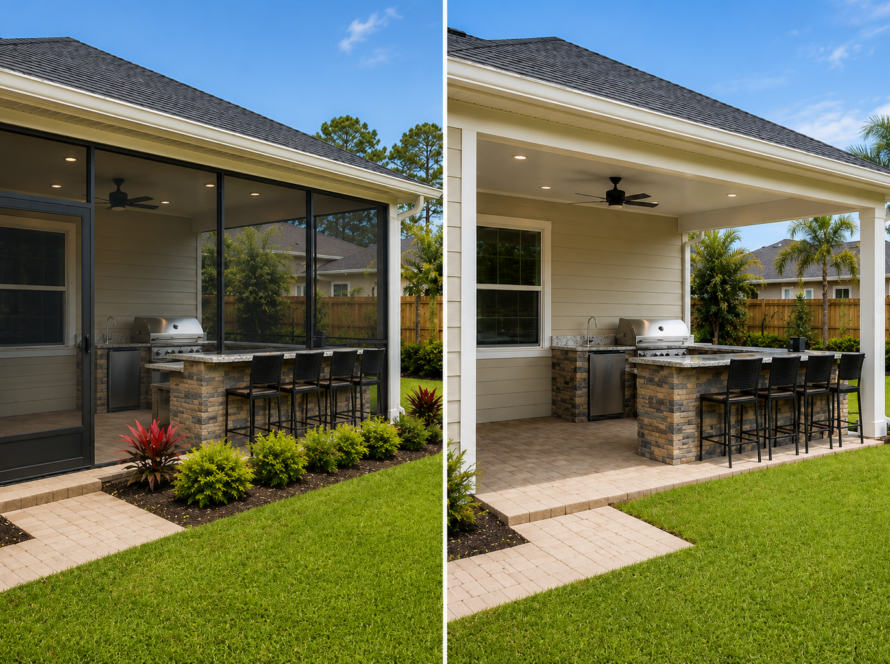
Pergolas are a natural fit for spaces built around entertaining rather than full-time weather protection. An outdoor kitchen paired with a pergola gets some shade over the cooking and dining area without feeling boxed in, which a lot of homeowners prefer for a space meant to feel like an extension of the yard rather than an indoor room moved outside. A poolside lounge area or a freestanding seating spot away from the house are two other common places a pergola ends up in a Northeast Florida backyard.
If you’re deciding between a pergola, a patio cover, or a full screen enclosure, or trying to figure out where a pergola would fit best on your property, our team can walk through the options during an on-site consultation so the finished structure matches how you actually plan to use the space.
Frequently Asked Questions
Does a pergola provide full shade like a patio cover? No. A pergola’s open-beam design filters sunlight rather than blocking it completely, giving partial, dappled shade. A patio cover with a solid roof blocks sun and rain fully, which is the better choice if complete coverage is the priority.
Can a pergola be screened in later? In some cases, yes, depending on how it was originally built, though it’s a bigger job than planning for screening from the start. It’s worth discussing during the initial design if there’s a chance you’ll want that option down the road.
What’s the difference between a pergola and an arbor? A pergola is a larger, more open structure typically built to cover a patio or seating area, while an arbor is usually smaller and more decorative, often built as a garden feature or entry point rather than a functional shade structure.
Do pergolas need a permit in Jacksonville? Most permanent pergola installations require a permit and Florida product approval documentation, similar to other exterior structures. A licensed contractor manages that process as part of the project.
Are adjustable louvered pergolas worth it over a fixed design? It depends on how much control you want over shade throughout the day. A louvered pergola lets you open or close the beams as the sun moves, while a fixed pergola offers a consistent, simpler design at a lower complexity.
Is a pergola a good fit for an outdoor kitchen? Yes, it’s one of the more common pairings. A pergola gives an outdoor kitchen some shade over the cooking and dining area without fully enclosing the space, which a lot of homeowners prefer for an entertaining-focused layout.