TL;DR — Quick Answers
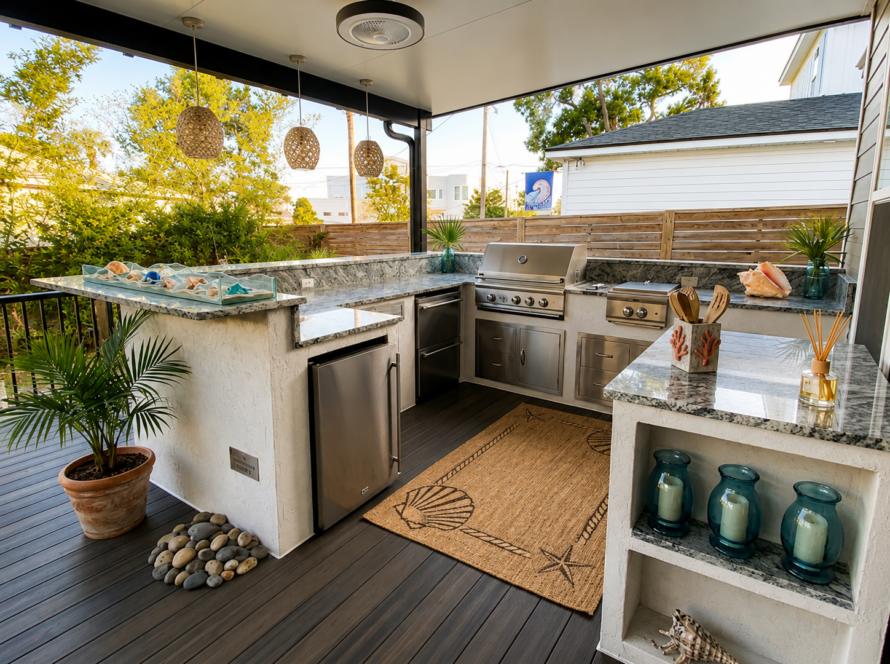
An outdoor kitchen is one of the highest-ROI backyard upgrades a Florida homeowner can make — and one of the most-used. Jacksonville’s year-round warm climate means an outdoor kitchen gets used far more than it would in most other states. Materials matter enormously in Florida — stainless steel, stone, and weather-rated cabinetry are non-negotiable for longevity. A well-designed outdoor kitchen includes more than a grill: countertop space, a sink, storage, and shade coverage make the difference. Custom layouts work for every backyard size — from compact courtyard kitchens to full-scale entertainment zones. Call for a free in-home estimate to find out what’s possible for your specific space and budget.
There’s a moment at every great backyard party when someone says it: “You need an outdoor kitchen.” And they’re right. In Florida — where the weather cooperates 10 months out of the year and nobody wants to be stuck inside at the stove while their guests are outside by the pool — an outdoor kitchen isn’t a luxury. It’s just smart living.
This guide covers what makes a great Florida outdoor kitchen, what features are worth the investment, what materials hold up in Jacksonville’s heat and humidity, and how to think about your own backyard project — whether you’re starting from a blank patio or upgrading an existing setup.
Why Florida Is the Perfect State for an Outdoor Kitchen
Most homeowners in colder climates think about outdoor kitchens as a seasonal feature — something they’ll use from Memorial Day to Labor Day and then cover up for eight months. That’s not how it works in Jacksonville.
Northeast Florida averages over 230 sunny days per year. Our winters are mild enough that a Tuesday evening in January can still mean grilling outside in a light jacket. When you factor in the outdoor-focused lifestyle, the pool culture, and the general Florida preference for living as much outside as inside, an outdoor kitchen gets used in ways that would genuinely surprise homeowners in other parts of the country.
According to the National Association of Home Builders, outdoor living spaces — including outdoor kitchens — are consistently among the most requested features by homebuyers in Southern states. In Florida specifically, a well-built outdoor kitchen is both a lifestyle upgrade and a real estate asset.
What Makes a Great Outdoor Kitchen? (It’s More Than a Grill)
The most common mistake homeowners make with outdoor kitchens is stopping at the grill. Drop a built-in gas grill in a concrete counter and call it a day. That works — but it’s not an outdoor kitchen. A great outdoor kitchen is a fully functional cooking and entertaining space that makes you want to live outside.
Here’s what separates a good outdoor kitchen from a great one:
Adequate Counter Space
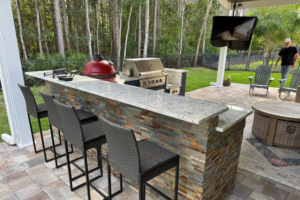
Prep space is the most underestimated element in outdoor kitchen design. If you don’t have room to set down a platter, season a brisket, or arrange plates before service, you’ll constantly be running back inside. Plan for more counter space than you think you need — you’ll use every inch.
A Sink and Running Water
This is the upgrade that separates an outdoor kitchen from a grill station. With a sink outside, you rinse vegetables, wash hands, fill drink coolers, and clean up without ever setting foot inside the house. Once you have it, you’ll wonder how you ever hosted without it.
Real Storage
Grilling tools, seasonings, extra propane, paper towels, serving ware, charcoal — it all needs a home. Sealed, weather-resistant storage cabinets built into the structure keep everything organized, protected from rain, and right where you need it.
Shade and Cover
Cooking in direct Florida afternoon sun is brutal. A pergola, solid patio cover, or roof structure over the cooking area isn’t a luxury add-on — it’s a functional necessity for a kitchen that actually gets used during peak Florida summer hours. It also protects your appliances and countertops from direct UV exposure and rain.
Lighting and Power Access
Integrated lighting extends your outdoor kitchen well into the evening — which is honestly the best time to cook in Florida during summer months. GFCI-protected outlets for small appliances, a blender, or speakers make the space genuinely versatile.
Grill Options: Gas, Charcoal, or Hybrid?
The grill is still the centerpiece, and the choice between gas, charcoal, and hybrid configurations genuinely matters based on how you cook.
Gas Grills
Gas is the most popular choice for built-in outdoor kitchens because of the convenience factor — turn a knob, hit the igniter, cook in two minutes. If you’re hosting frequently, gas makes keeping up with dinner service easy. Modern high-BTU gas grills also produce enough heat for a solid sear. The tradeoff is flavor: gas doesn’t deliver the smoky complexity of charcoal or wood.
Charcoal and Kamado Grills
Charcoal and kamado-style grills (like the Big Green Egg or Kamado Joe) are the choice for homeowners who take the cooking seriously. The flavor profile is on another level, and kamado grills do double duty as smokers — you can low-and-slow a brisket for 12 hours or sear a steak at 700 degrees in the same unit. They’re heavier, require more tending, and take longer to preheat, but serious grillers rarely go back.
Hybrid Setups
Many Jacksonville homeowners build outdoor kitchens with both — a built-in gas grill for weeknight convenience and a kamado grill for weekend cooks. If your budget and space allow it, a hybrid setup gives you the best of both worlds and makes the outdoor kitchen genuinely versatile for any occasion.
Materials That Last in Florida’s Climate
This is where outdoor kitchens in Florida differ from outdoor kitchens in other parts of the country. The combination of high humidity, salt air in coastal areas, intense UV, heavy afternoon rain, and summer heat creates conditions that will expose poor material choices fast. Here’s what holds up and what doesn’t.
Countertops
Granite, concrete, and natural stone are the top choices for Florida outdoor kitchen countertops. All three handle heat from cooking, moisture from rain and humidity, and UV exposure without degrading. Porcelain tile is also a solid option — it’s virtually impervious to moisture and extremely low maintenance. Avoid wood countertops in Florida’s outdoor environment — they warp, crack, and mold regardless of how well they’re sealed.
Cabinetry and Frames
Aluminum-framed, stucco-finished cabinet structures are the standard for durable Florida outdoor kitchens. Aluminum handles moisture exposure indefinitely without degrading. Premium stainless steel cabinet doors and drawers are the best option for hardware — high-grade stainless holds up even in coastal conditions where salt air is a factor. Avoid wood-framed or laminate cabinetry in Florida’s outdoor environment; they will deteriorate.
Appliances
Commercial-grade stainless steel appliances — grills, refrigerators, side burners, and access doors — are built specifically for outdoor exposure. Energy Star-rated outdoor refrigerators are worth the investment for a built-in kitchen, as they’re designed to maintain temperature in high-ambient-heat environments — critical when your outdoor fridge is sitting in Florida summer sun. Consumer-grade indoor appliances don’t perform the same way outdoors and fail faster.
Outdoor Kitchen Design Ideas for Jacksonville Backyards
One of the biggest misconceptions about outdoor kitchens is that they require a large backyard. A well-designed outdoor kitchen can work in almost any space — it’s about layout efficiency, not square footage.
The Classic L-Shape
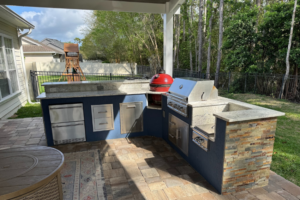
The L-shaped layout is the most popular configuration because it separates cooking from prep and creates a natural traffic flow. The grill goes on one leg, prep counter and sink on the other. Guests can hang around the counter without getting in the cook’s way. Works beautifully in mid-sized backyards and pairs well with a covered patio or pergola overhead.
The Linear Bar Kitchen
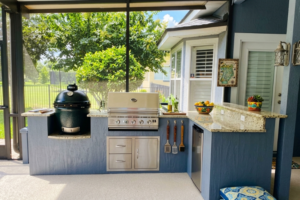
For narrower spaces or backyards where the cooking area runs along a wall or fence line, a straight bar-style layout is clean and efficient. Grill, counter, sink, and storage all in one run. Add bar seating on the exterior face and you’ve turned the cooking area into a social gathering spot — guests face the cook instead of having their backs to the action.
The Full Entertainment Zone
For homeowners with more space and a vision for a complete backyard entertainment destination, the full outdoor kitchen can include a grill station, kamado smoker, side burner, outdoor refrigerator, sink, pizza oven, wet bar, and seating area — all under a covered pergola or solid roof structure. These are the builds that turn a Jacksonville backyard into the neighborhood’s unofficial gathering place.
Outdoor Kitchens and Home Value: What the Numbers Show
Beyond the lifestyle benefit, a well-built outdoor kitchen has real financial value at resale. Buyers in Florida — especially in the Jacksonville market — actively look for functional outdoor living spaces. A turnkey outdoor kitchen removes a project from their to-do list and signals that the home has been well-maintained and thoughtfully upgraded.
The Remodeling Magazine Cost vs. Value Report consistently shows that outdoor living improvements in the South Atlantic region — which includes Florida — deliver among the strongest returns of any home improvement category. Outdoor kitchens in particular tend to recoup a strong percentage of cost at resale, particularly when built with durable materials that show well to prospective buyers.
The real return, though, is the years of enjoyment before you ever sell. A well-built outdoor kitchen changes how you use your home — and in Florida, that means using it almost every week.
What to Expect From an Outdoor Kitchen Build in Jacksonville
If you’ve never built an outdoor kitchen before, here’s a realistic picture of how the process works with a licensed contractor in Jacksonville.
Design Consultation
The process starts with a conversation about how you cook, how you entertain, and how you want the space to feel. A good contractor doesn’t hand you a catalog — they listen first. Your sun orientation, existing patio layout, drainage, access to gas and water lines, and HOA requirements all factor into the design.
Site Evaluation and Measurements
Before any design is finalized, the contractor needs to see your actual space. What looks great on paper sometimes needs adjustment once you account for real-world setback distances, utility line locations, tree roots, and how the afternoon light hits your backyard.
Custom Layout and Estimate
You should receive a clear, itemized estimate that covers materials, appliances, labor, and permitting costs. Pricing for outdoor kitchen projects in Jacksonville typically ranges from $10,000 for a functional standard design to $30,000+ for premium full-feature builds. Vague or verbal estimates are a red flag — insist on a written, itemized proposal.
Permitting and Code Compliance
Most outdoor kitchen builds in Duval County require permits, especially when gas lines, electrical, or plumbing are involved. This is not optional — unpermitted work can create problems when you sell the home or make an insurance claim. A reputable contractor handles permitting as part of the project, not an add-on.
Installation
Once permits are approved, the actual build typically takes 3–5 days for a standard project. Larger or more complex builds may take longer. Your contractor should leave a clean job site and walk you through the finished product before signing off.
Why Jacksonville Homeowners Build With Lifetime Enclosures
Building an outdoor kitchen is a significant investment, and the contractor you choose determines whether it lasts five years or fifty. Lifetime Enclosures has been building custom outdoor living spaces across Northeast Florida since 1990 — over 36 years of experience working in this specific climate, with quality materials built for Florida conditions, under Florida’s building codes.
Every outdoor kitchen project starts with a free, no-pressure in-home consultation. The team walks your space, asks the right questions, and designs a layout that actually fits how your family lives — not a generic template from a brochure. Outdoor kitchens come in Standard, Premium, and Luxury configurations to fit different budgets and visions, from a clean, functional grill station to a full-scale entertainment build.
Materials are specified for Florida conditions: aluminum-framed structures, premium hardware, granite or stone countertops, and commercial-grade appliances. Everything is permitted, code-compliant, and backed by a warranty that means something.
Frequently Asked Questions About Outdoor Kitchens in Jacksonville
Q: How much does an outdoor kitchen cost in Jacksonville, FL? A: Most outdoor kitchen projects in Jacksonville range from $10,000 to $30,000 depending on size, materials, appliances, and features. A standard grill-and-counter setup sits at the lower end. A full-feature build with premium appliances, stone countertops, sink, refrigerator, and covered structure is at the higher end. A detailed estimate from your contractor will give you a clear picture before any commitment.
Q: What appliances should I include in a Florida outdoor kitchen? A: At minimum: a built-in grill, counter space, and covered storage. The upgrades that get used most are a sink with running water, an outdoor-rated refrigerator, and a side burner for sauces and sides. A kamado smoker is worth including if you do any slow-cooking. Every addition beyond a basic grill meaningfully expands how you actually use the space.
Q: What countertop material is best for a Florida outdoor kitchen? A: Granite, natural stone, concrete, and porcelain tile all perform well in Florida conditions. All are heat-tolerant, moisture-resistant, and UV-stable. Granite is the most popular because it’s widely available, visually versatile, and extremely durable. Avoid wood countertops outdoors in Florida — humidity and sun will deteriorate them regardless of sealing.
Q: Do I need a permit to build an outdoor kitchen in Jacksonville? A: Yes, in most cases. Any outdoor kitchen involving gas lines, plumbing, or electrical work requires permits through Duval County or your local municipality. A licensed contractor manages this process as part of the project. Don’t skip permits — unpermitted structures can create issues at resale or when filing insurance claims.
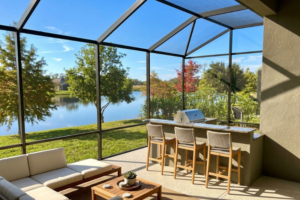
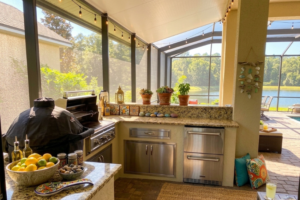
Q: Can I add an outdoor kitchen to an existing screened enclosure or lanai? A: In many cases, yes — with proper planning. An outdoor kitchen built inside a screened enclosure or lanai needs ventilation planning for gas appliances and grease-rated construction materials. It’s a popular combination in Jacksonville because the enclosure handles bugs and afternoon rain while the kitchen handles the cooking. Your contractor should assess the existing structure before designing inside it.
Q: How long does it take to build an outdoor kitchen? A: Most outdoor kitchen projects take 4–8 weeks from signed contract to completion, including permitting time. The physical build is usually 3–5 days. Project complexity, appliance lead times, and permit approval timelines all affect the schedule.
Ready to Build the Backyard You’ve Always Wanted?
An outdoor kitchen isn’t just a home improvement project. In Florida, it’s the upgrade that changes how you spend your evenings, how you host your neighbors, and how much time your family actually spends in the backyard together. The right outdoor kitchen becomes the center of your home’s social life — and in Jacksonville’s climate, it earns that status year-round.
Call Lifetime Enclosures today at (904) 731-5580 to schedule your free in-home estimate. Our team will come to your home, walk your backyard, and help you design an outdoor kitchen that fits your space, your cooking style, and your budget — no obligation, no pressure.
Visit lifetimeenclosures.com/services/outdoor-kitchens to explore completed outdoor kitchen projects from across Jacksonville and get a sense of what Lifetime Enclosures can build in your backyard.